
"Grade 2 coffee"
7000 article(s) found

The initial processing technology of coffee in Yunnan requires Arabica to grow coffee beans.
Technical requirements for the initial processing of small seed (Arabica seed) Coffee 1. There are two processing methods for coffee beans made from fresh coffee fruits, namely wet processing and dry processing. The first and second grade fruits are processed by wet method, and the third grade fruits are processed by dry method in areas without peeling machine and lack of water. 2. Processing technology 2.1 equipment and facilities should be equipped with fresh fruit collection pool and siphon

Colombian coffee growing environment Colombian coffee variety grade
Colombian coffee grades are divided into several Colombian coffee-growing histories, dating back to the Spanish colonial era in the 16th century, and there are many theories about the history of coffee in Colombia: one: it is said to come from the island of the Caribbean and from El Salvador in Central America. Second: in 1808, a priest transferred coffee beans from the French Antilles to Venezuela.

Description of roasting degree curve of Yejiaxuefei coffee beans introduction to the origin of sour manor
Yega Chuefei Coffee Bean Baking degree Curve Flavor description of sour Manor Origin introduction Yega Xuefei is divided into two categories according to the different ways of handling raw coffee beans: category An is washed, and the grade standard is set by the American Fine Coffee Association (SCAA), which is divided into Gr-1 and Gr-2, the smaller the Arabic numeral, the higher the grade, the distinct style of G1 Yega Chuefei, the flavor of citrus and floral flavor in the coffee liquid.

Classification standard of coffee raw beans for fine coffee
There are two ways to classify raw coffee beans, one is the filter number, and the other is the elevation. It is divided by the number of the filter screen, and the size is in the unit of the screen (size). Round beans are generally smaller than flat beans, between 8-13 and 12-29. 8, 9, 10. 12, 13. 18. 29 = small, medium, ordinary. Quasi-big. Big, extra large. The bigger the size, the bigger the beans. Like SC.

Quality coffee beans, knowledge, classification of raw coffee beans
There are two ways to classify raw coffee beans, one is the filter number, and the other is the elevation. It is divided by the number of the filter screen, and the size is in the unit of the screen (size). Round beans are generally smaller than flat beans, between 8-13 and 12-29. 8, 9, 10. 12, 13. 18. 29 = small, medium, ordinary. Quasi-big. Big, extra large. The bigger the size, the bigger the beans. Like SC.

Yegashefi Woka Cooperative Coffee Bean Features Yegashefi Coffee Production Area Distribution
Professional barista communication Please pay attention to coffee workshop (Weixin Official Accounts cafe_style) Yirgacheffe refining method is mostly washed refining method, placed in washing tank for about 72 hours fermentation shelling, directly dried outside the factory. Its raw beans

Ethiopian Hambera Coffee 5.0 Sidama Coffee Flavor Taste Characteristics Introduction
Professional coffee knowledge exchange More coffee bean information Please pay attention to coffee workshop (Weixin Official Accounts cafe_style) Several important Ethiopian coffee producing areas, such as Yejiashev and Sidamo, have received considerable attention in recent years. Guji is also a part of Oromia Asia, southwest Ethiopia, south of Addis Ababa, the capital.

Standard for grading of fine coffee beans, common sense coffee and raw beans
It is divided by the number of the filter screen, and the size is in the unit of the screen (size). Round beans are generally smaller than flat beans, between 8-13 and 12-29. 8, 9, 10. 12, 13. 18. 29 = small, medium, ordinary. Quasi-big. Big, extra large. The bigger the size, the bigger the beans. SC-19, for example, is the No. 19 bean. According to the elevation of the cultivated land, it can be divided into seven grades.

How does it feel to wash Sidamo G1 honey?
Professional coffee knowledge exchange more coffee bean information please follow coffee workshop (Wechat official account cafe_style) washing: Grade-1;Grade-2 (G1G2) Sun: Grade-1 and Grade-3Grade-5 (G1G3G4G5) production area: Ethiopian Oromia species: Ethiopian native species Haiba: 2000 treatment: washing can be found in Ethiopia

Starbucks Coffee Bean Grade-Starbucks Coffee Bean Grade
Coffee Green Bean Grade Differentiation-Starbucks Coffee Bean Mill Grade Causes: 1) Agriculture: Blackening is the result of excessive fermentation of microorganisms to produce pigments. Preventive measures: 1) Agriculture. Black beans can be prevented at harvest time, picking only ripe fruits from trees, and avoiding excessive fermentation during farm processing. 2)Processing. When the coffee bean endocarp is removed, black beans are very obvious.
Yunnan Coffee beans Special Grade II Standard
Special secondary appearance and sensory characteristics project requires special secondary sensory aroma, flavor and taste are very good. The appearance should be light blue or light green. Physical index item special second level (7.1mm) test method granularity / >, 90 DB53/T 154.6 broken beans / (%), 10 DB53/T 154.8 discolored beans / (%), 2.0 DB53/T 154.8 foreign bodies / (%), 0.1 DB53

How much is Sidamo Honey Coffee Price
Professional barista communication please follow coffee workshop (Wechat official account cafe_style) washing: Grade-1;Grade-2 (G1G2) sun: Grade-1 and Grade-3Grade-5 (G1G3G4G5) production area: Ethiopia Oromia species: Ethiopia native species Haiba: 2000 treatment: washing factory name: coffee workshop site: Guangzhou Yuexiu Museum District Security

How to make Brazilian Santos Coffee to Brazilian Santos Coffee Cup
Professional coffee knowledge exchange more coffee bean information please follow the coffee workshop (Wechat official account cafe_style) Brazilian coffee bean grading | Brazil Santos Stictly Soft extreme temperature and No.2 coffee naming? Brazil is one of the largest coffee producers in the world. It is the largest coffee producer, accounting for 1/3 of the global consumption of all grades and types of coffee.
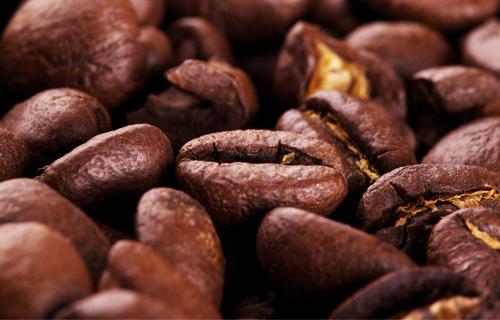
Tanzania coffee beans
Tanzania Coffee Bean Type Grade Mbinga-producing region (suboptimal) 1.SC3 1 2.SC11 2 3.SC14 3 4.KP 423 Local 4 5.SC 9 N/A The table below shows the characteristics of the varieties of Tanzania coffee beans compared to the standard coffee varieties. Total grade SC3 SC11 SC14 KP423 Local 1. High yield 5 4 3 2. Marketable 5 5 4 19 2

From model to champion of WLAC Coffee pull Art Competition in China
Following Cafe Review (Wechat official account vdailycom) found that Beautiful Cafe opened a small shop of its own Li Qi, Mellon Champion barista, Mellon training Department Intermediate trainer, engaged in the coffee industry for 3 years. Competition experience: she won the SCAE certified barista 2016 WLAC World pull Art Competition China final champion 2016 WLAC World pull Art Competition runner-up.
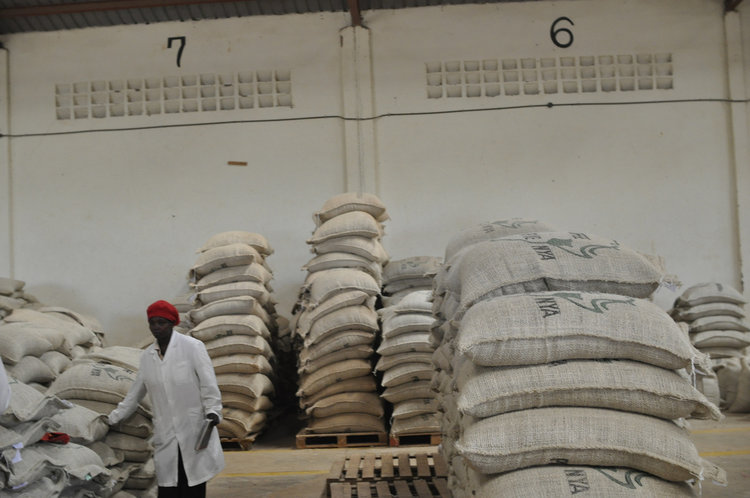
Yega Sheffield Wauka Coffee beans Flavor characteristics of Yega Chuefei Water washed Wauka Coffee beans
Yega Xuefei's coffee trees were planted by European monks (somewhat similar to Belgian monks who advocated planting wheat and brewing beer), and were later transferred to farmers or cooperatives. Yega Xuefei is actually built by surrounding coffee communities or cooperatives, including Edido, Hafusha, Hama and Bdon near the Fog Valley. Most coffee beans are washed with water, but also

Introduction to the method of regional treatment of flavor varieties in the description of the taste of Yejiaxuefei coffee
Yega Xuefei Coffee characteristic Taste description Flavor Variety Regional treatment method the grading system of Ethiopian coffee is not distinguished by the number of eyes, but according to the proportion of defective beans in raw beans. In October 2009, Ethiopia launched the ECX boutique coffee trading classification system. Q-Grader rated raw beans as follows: washed Yega Xuefei was divided into Grad

How is the grade of coffee divided? What is the highest grade of coffee beans?
There are a wide variety of coffee beans, and the prices are high and low, so what's the difference between them? How is the grade of coffee divided? Today we will introduce the classification of coffee beans. There are differences in hierarchy between different regions of different countries; for example, mainly 300 in Ethiopia

How did Sidamo Honey Coffee come from? how to divide the grades of Sidamo coffee beans?
Professional barista communication please follow coffee workshop (Wechat official account cafe_style) washing: Grade-1;Grade-2 (G1G2) sun: Grade-1 and Grade-3Grade-5 (G1G3G4G5) production area: Ethiopia Oromia species: Ethiopia native species Haiba: 2000 treatment: washing factory name: coffee workshop site: Guangzhou Yuexiu Museum District Security
Old Ethiopian grading standards--Definition of grading for washing and solarization
Professional coffee knowledge exchange More coffee bean information Please pay attention to coffee workshop (Weixin Official Accounts cafe_style) Ethiopia old classification standard Ethiopian coffee beans are generally divided into five levels, according to washing and sun treatment for G1, G2, G3, G4, G5, the first and second levels for washed coffee beans, and sun coffee beans according to coffee quality is divided into G3,G4,G5 three and so on